微信扫码

  • 18515630288

新模块


内皮功能障碍


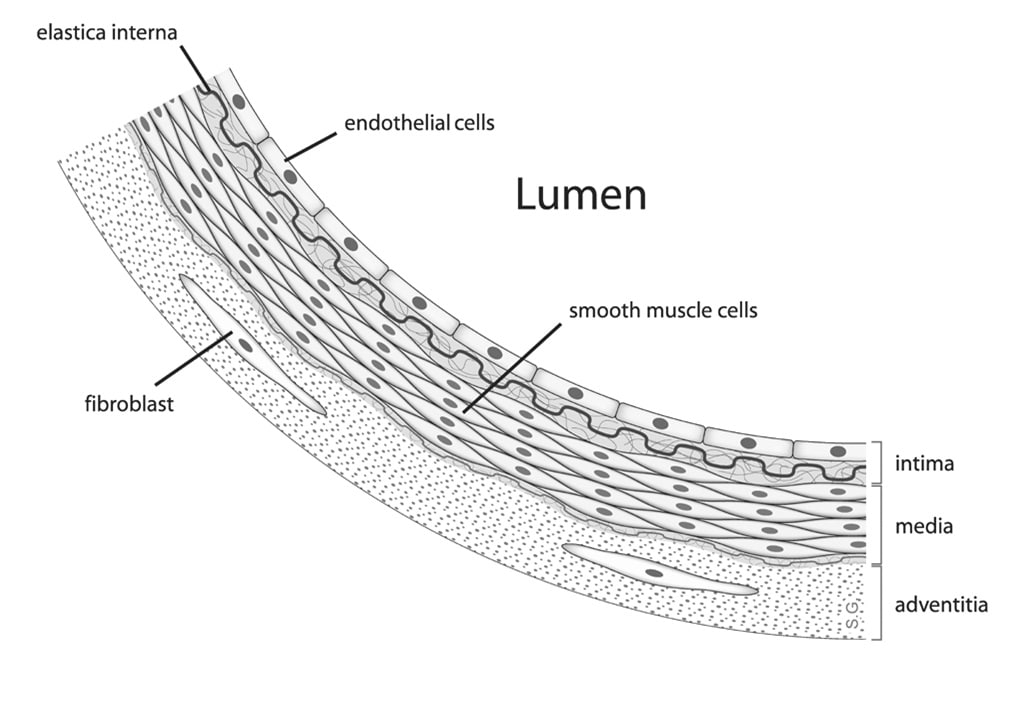
内皮细胞是循环系统中血管壁内部的细胞层。内皮细胞在许多生理活动中都有着非常重要的作用,如血压调节等。内皮细胞功能不全的典型特征是血管舒张功能紊乱、一氧化氮(NO)利用度降低等。在很多疾病的早期就已经能够观察到内皮细胞的相关变化。

Source: Stijn A.I. Ghesquiere, University of Maastricht


越来越多的证据将微血管功能障碍与心血管情况联系起来:它可能是中风和心脏病发作的预测因子。 可以通过进行引起内皮依赖性和/或独立血管舒张的试验来研究内皮功能。 这些测试包括阻断后反应性充血 (PORH),局部加热(热激发)和血管活性药物离子导入。


阻断后反应性充血(PORH)


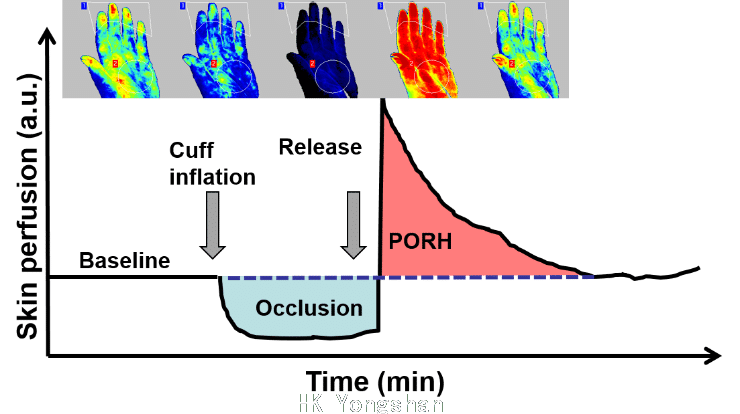
可以通过观察对反应性充血的反应来评估血管功能。反应性充血是由于动脉血液供应的暂时阻塞导致的血流增加。内皮功能受损的患者显示出与健康人不同的反应。通常通过使用血压袖带进行动脉闭塞来进行测试,通常持续几分钟。在闭塞之后,压力突然释放,导致大量血液流入先前闭塞的组织。在闭塞之前,期间和之后进行测量灌注,并且通过灌注的幅度和改变,所花费的时间等相关的若干参数可以给出关于受试者的血管健康的信息。


可以使用 激光多普勒探头 或 激光散斑对比成像仪测量灌注。


热挑战/热激发


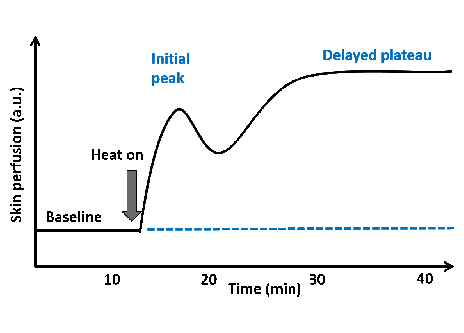
局部加热皮肤可引起附近血管舒张。 在健康个体中,对热充血的反应表现出可预测的模式。 其特征在于由感觉信号传入皮肤而导致的血液灌注的初始峰值,以及由一氧化氮释放介导的二次数值上升和平稳期。

可以使用激光多普勒探头 或 激光散斑对比成像仪测量灌注。

可以使用PeriFlux System 控制加热,与 可加热的探头 配合使用,也可与激光散斑对比成像仪结合测量。


离子导入


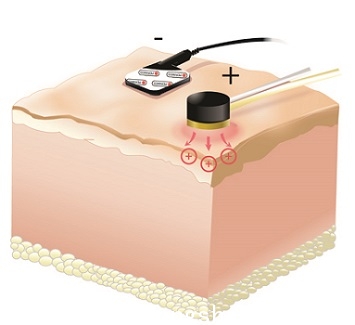
离子导入仪是一种将药物以离子的形式导入皮肤的技术。举例来说,可以研究药物离子导入对不同患者微循环内皮功能的影响。

可以通过激光多普勒 使用带有集成激光多普勒探头的专用输送电极 或使用激光散斑对比成像仪, 搭配透明的输送电极测量血流灌注量。


案例:肥胖症和 2 型糖尿病中的微循环


Alfons J.H.M.Houben 博士 – 荷兰马斯特里赫特大学心血管研究中心 (CARIM) 内科

多年来,我的研究重点一直是微血管功能障碍 (MVD),它是(心脏)代谢疾病的病因也是其后果(我们的工作假设请见 1)。微循环的一个重要功能是向所有组织输送氧气/营养物质并清除废物。在正常代谢中,这包括将餐后肠道吸收的葡萄糖输送到骨骼肌中,以便作为糖原储存起来。





新模块

相关文献

  • Binggeli C. et al. Statins enhance postischemic hyperemia in the skin circulation of hypercholesterolemic patients. J Amer Collage of Card 2003 42; 1:71-77    
  • Ruano J. et al. Phenolic content of virgin olive oil improves ischemic reactive hyperemia in hypercholesterolemic patients. J Amer Collage of Card 2005 46; 10:1864-1868    
  • Roustit M. et al, Excellent reproducibility of laser speckle contrast imaging to assess skin microvascular reactivity Microvascular Research, 2010    
  • Ann Humeau-Heurtier et al. Excellent inter- and intra-observer reproducibility of microvascular tests using laser speckle contrast imaging, Clinical Hemorheology and Microcirculation, 2013    
  • Roustit et al, Assessment of endothelial and neurovascular function in human skin microcirculation, Trends in Pharmacological Sciences, 2013, 34(7):373-84    
  • Kellogg D.L. Jr. In vivo mechanisms of cutaneous vasodilation and vasoconstriction in humans during thermoregulatory challenges. J Appl Physiol 2006;100:1709-1718.    
  • Gooding K.M. et al, Maximum Skin Hyperaemia Induced by Local Heating: Possible Mechanism. J Vasc Res 2006;43:270-277    
  • Minson C.T. et al, Nitric oxide and neurally mediated regulation of skin blood flow during local heating. J Appl Physiol 2001 91:1619-1626    
  • Minson C.T. et al, Thermal provocation to evaluate microvascular reactivity in human skin. J Appl Physiol 2010 109:1239-1246    
  • Blaauw J. et al. Abnormal endothelium-dependent microvascular reactivity in recently preeclamptic women. Amer Coll of Obstetricians and Gynecologists, 2005, 105; 3:626-632    
  • Durand S. et al. Prostaglandins participate in the late phase of the vascular response to acetylcholine iontophoresis in humans. J Physiol, 2004, 811-819    
  • Roustit et al, Assessment of endothelial and neurovascular function in human skin microcirculation. Trends in Pharmacological Sciences, 2013, 34(7):373-84.    
  • Houben AJ, Martens RJ, Stehouwer CD. Assessing Microvascular Function in Humans from a Chronic Disease Perspective. J Am Soc Nephrol. 2017 Dec;28(12):3461-3472.    
  • Jonk AM, Houben AJ, de Jongh RT, et al. Microvascular dysfunction in obesity: a potential mechanism in the pathogenesis of obesity-associated insulin resistance and hypertension. Physiology (Bethesda). 2007 Aug;22:252-60.    
  • Schalkwijk CG. Vascular AGE-ing by methylglyoxal: the past, the present and the future. Diabetologia. 2015 Aug;58(8):1715-9    
  • Jonk AM, Houben AJ, Schaper NC, et al. Meal-related increases in microvascular vasomotion are impaired in obese individuals: a potential mechanism in the pathogenesis of obesity-related insulin resistance. Diabetes Care. 2011 May;34 Suppl 2:S342-8.    
  • Muris DM, Houben AJ, Kroon AA, et al. Age, waist circumference, and blood pressure are associated with skin microvascular flow motion: the Maastricht Study. J Hypertens. 2014 Dec;32(12):2439-49.    
  • Sörensen BM, Houben AJHM, Berendschot TTJM, et al. Cardiovascular risk factors as determinants of retinal and skin microvascular function: The Maastricht Study. PLoS One. 2017 Oct 27;12(10):e0187324.    
  • Sörensen BM, Houben AJ, Berendschot TT, et al. Prediabetes and Type 2 Diabetes Are Associated With Generalized Microvascular Dysfunction: The Maastricht Study. Circulation. 2016 Nov 1;134(18):1339-1352.    
  • Sörensen BM, Houben AJ, Berendschot TT, et al. Hyperglycemia Is the Main Mediator of Prediabetes- and Type 2 Diabetes-Associated Impairment of Microvascular Function: The Maastricht Study. Diabetes Care. 2017 Aug;40(8):e103-e105.    
  • Houben AJ, van Agtmaal M, Sörensen B, et al. Markers of microvascular dysfunction are associated with depressive symptoms: the Maastricht Study. IVBM, Helsinki 2018, abstract.    
  • Martens RJ, Henry RM, Houben AJ, et al. Capillary Rarefaction Associates with Albuminuria: The Maastricht Study. J Am Soc Nephrol. 2016 Dec;27(12):3748-3757.    
  • Martens RJ, Houben AJ, Kooman JP, et al. Microvascular endothelial dysfunction is associated with albuminuria: the Maastricht Study. J Hypertens. 2018 May;36(5):1178-1187.